The Netherlands is undergoing an unprecedented energy transformation. With more than 20 GW of installed solar capacity and rapidly accelerating growth, the country has positioned itself as one of Europe’s leaders in renewable generation.
However, this success also brings a major challenge: grid congestion. An increasing number of companies, both industrial and service-based, are facing restrictions on injecting surplus electricity into the grid, contracting additional capacity, or even ensuring continuity of supply. Congestion is no longer an occasional issue but a structural one, directly impacting the country’s competitiveness. In this context, large-scale energy storage has become a key enabler. It not only allows companies to maximize the value of their renewable production but also provides flexibility to the electricity system and ensures resilience for businesses that rely on a constant supply.
Van Acht: Sustainability as a Business Strategy
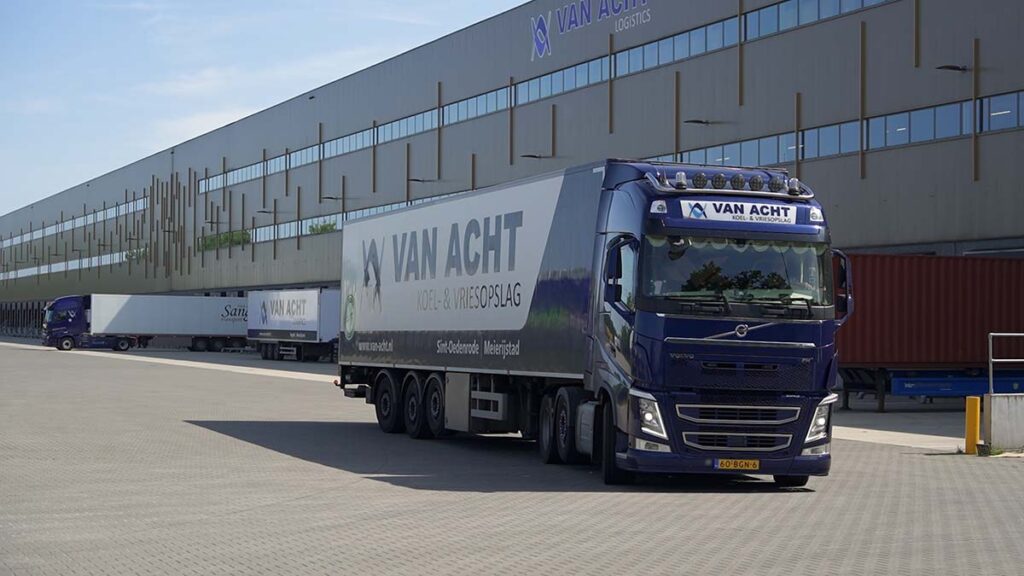
Against this backdrop, Van Acht, a family-owned logistics company based in Veghel, has chosen to anticipate the future. With a strong entrepreneurial spirit and innovative vision, Van Acht has been investing in sustainability for years. The company’s first major step was the installation of 12,500 solar panels (8.5 MWp) at its facilities. This allowed them to cover a significant share of their energy consumption with their own renewable generation. However, limitations soon became apparent:
- Solar production is intermittent and dependent on daylight hours.
- The local grid was not always able to absorb the excess generation.
- During periods of high demand, the company remained dependent on the grid, exposing operations to congestion risks.
The question was clear: how to maximize the use of solar energy while ensuring continuity in logistics operations?
The Answer: Huawei Smart Energy Storage
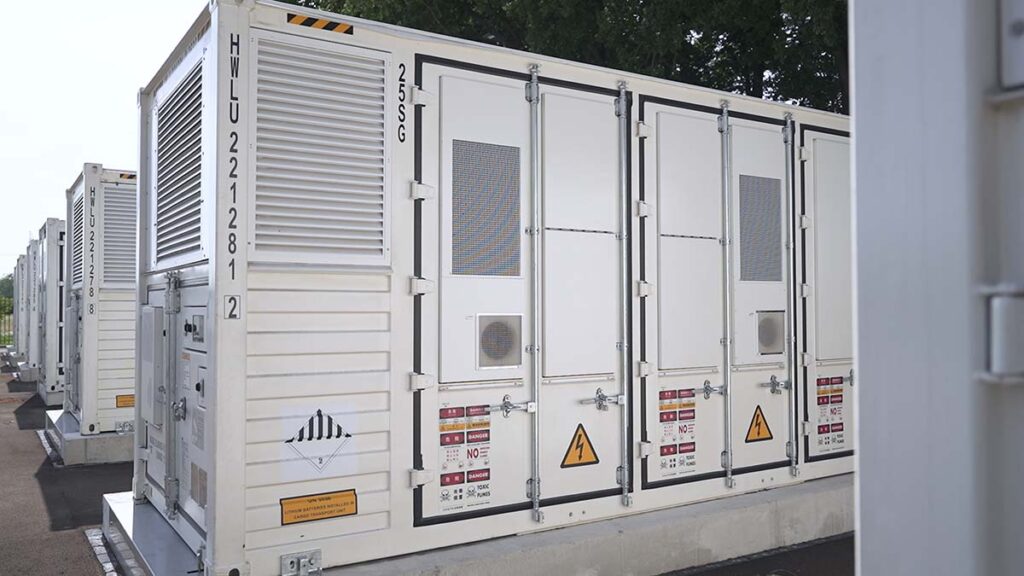
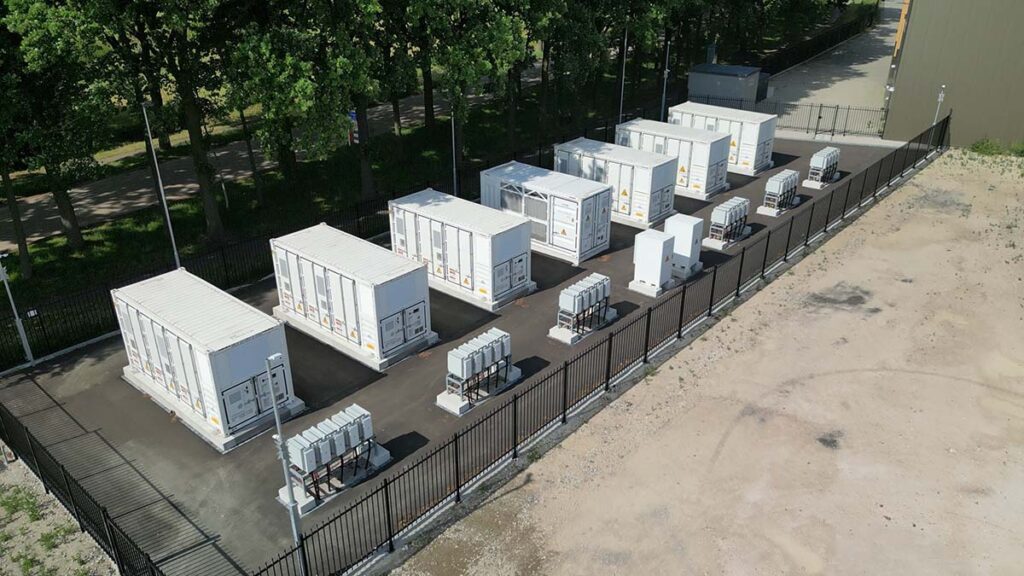
In 2025, Van Acht, in collaboration with Huawei Digital Power, Covolt, and ELIX, commissioned a 12 MWh / 6 MW energy storage system based on Huawei’s LUNA2000 Smart String Energy Storage System (ESS). This became the largest storage project installed by Huawei in the Benelux region—a milestone that reflects the growing maturity of storage solutions in Europe. The key lies in its modular and scalable design. The Smart String ESS allows capacity to be flexibly configured to meet specific customer needs. In Van Acht’s case, the system was designed to:
- Store solar surpluses during peak production hours.
- Release stored energy when demand is higher or when the grid faces constraints.
- Contribute to grid stability by providing flexibility in a highly congested area.
The Role of Covolt and ELIX
The project exemplifies strategic collaboration:
- Huawei Digital Power delivered the storage technology, a robust, secure, and efficient system.
- Covolt provided the intelligent energy management software, optimizing battery charge and discharge according to grid conditions and market signals.
- ELIX, as local partner, oversaw technical execution and integration within Van Acht’s facilities. The result: a solution that combines global innovation with local execution—delivering value from day one.
Tangible Benefits for Van Acht
The large-scale battery system has delivered clear advantages:
Business Continuity
- Logistics operations cannot stop. With storage, Van Acht remains operational even under grid restrictions.
Cost Optimization
- Storing inexpensive electricity (from solar or the grid) and consuming it during peak-price hours reduces overall energy costs.
Maximum Solar Utilization
- Photovoltaic surpluses are no longer wasted—they are stored and used when they deliver the greatest value.
Contribution to the Grid
- Beyond the company’s benefit, the project also helps stabilize the local grid.
Sustainable Reputation
- The investment strengthens Van Acht’s image as an innovative company committed to the energy transition.
The Logistics Sector and the Energy Challenge
Van Acht’s case illustrates a challenge shared by many logistics and industrial companies. The electrification of processes, the adoption of electric vehicles, and the reliance on automated systems mean that energy resilience is now as important as efficiency.
Large-scale storage is emerging as the fundamental tool—securing internal operations while at the same time creating value for the wider energy system.
Van Acht is therefore ahead of a trend that will shape the coming decade: companies turning energy from a pure operational cost into a strategic asset.
Huawei: A Complete Energy Ecosystem for Industry
The Van Acht case is not just an isolated project: it is a tangible demonstration of how industry can move toward an integrated and sustainable energy model with Huawei’s support.
Today, industrial companies need much more than individual products. They require complete ecosystems, capable of covering every link in the energy value chain. And this is where Huawei makes the difference.
Our portfolio includes:
- Next-generation solar inverters, designed to maximize photovoltaic performance and ensure stability even in congested grids.
- Modular and scalable energy storage systems (ESS), such as the LUNA2000 series, which provide flexibility, resilience, and efficiency in renewable energy management.
- Chargers for both light and heavy-duty electric vehicles, including trucks, which are becoming increasingly crucial in logistics and transportation.
The true innovation comes from the combination of these three pillars: solar generation, smart storage, and fleet charging. Together, they enable a 360° energy management model, where production, consumption, and mobility are coordinated in real time to maximize renewable usage and reduce operating costs.
This integrated approach positions Huawei as a strategic technology partner, capable of supporting industries such as logistics and manufacturing in their journey toward electrification, digitalization, and decarbonization of operations.
Huawei delivers more than technology: it delivers an ecosystem that prepares businesses for the energy future.
Energy as a Competitive Advantage
The Van Acht case shows how business vision, technological innovation, and strategic collaboration can turn a challenge into an opportunity.
By installing a 12 MWh / 6 MW system, the company has secured operational continuity, optimized costs, and reinforced grid stability—while positioning itself as a sustainability leader in the logistics sector.
The key lesson is clear: energy is no longer just an operating cost but a strategic asset that generates competitive advantage.
Van Acht has taken a decisive step forward and, with the support of Huawei, Covolt, and ELIX, stands as an example of how the energy transition is not only environmental but also a driver of business transformation.